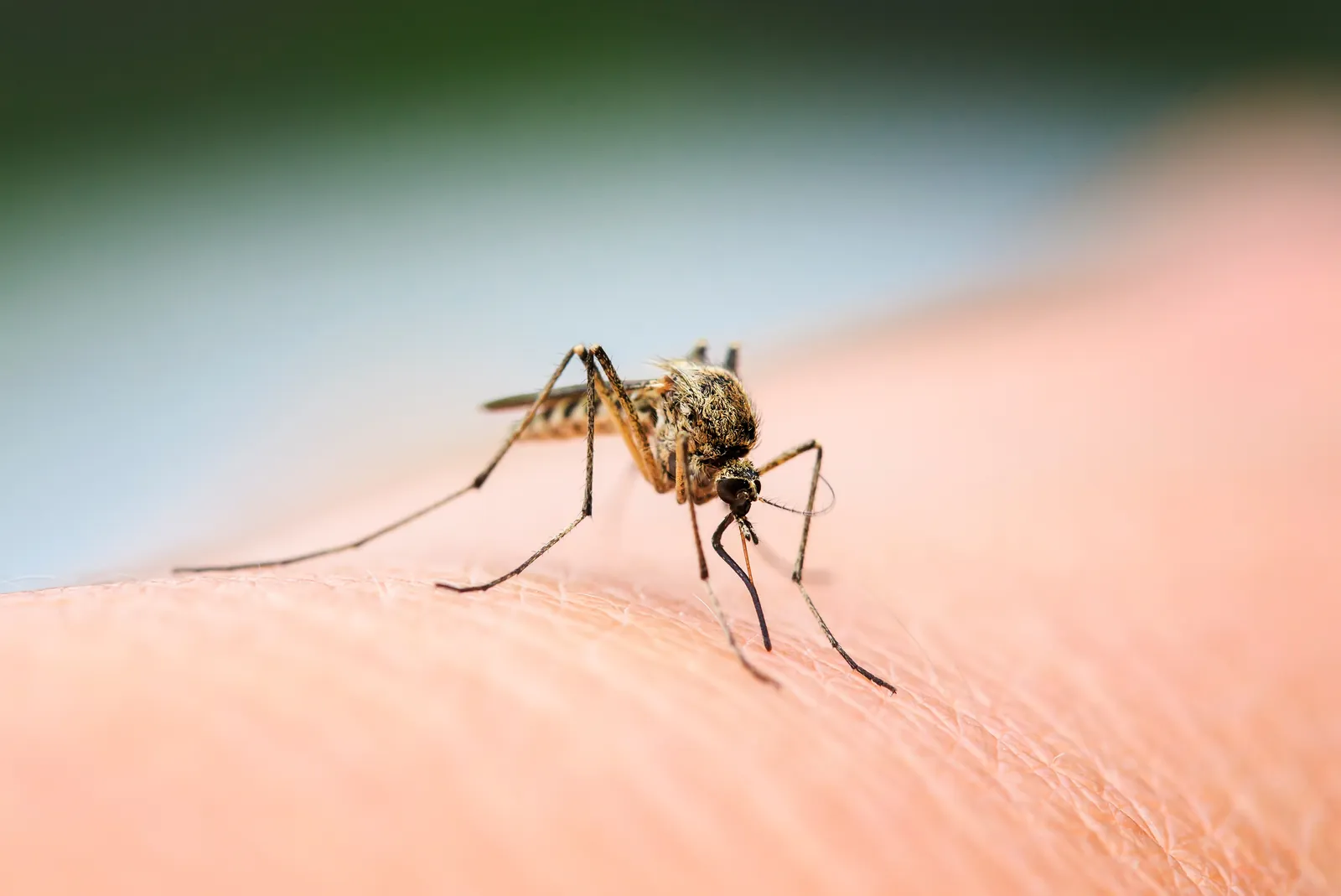
Take your backyard back. Year-round mosquito control.
Palm Beach County's humidity, bromeliads, and rainy-season standing water mean mosquito pressure runs nine months a year here. We treat the source, not the symptom — barrier spray, In2Care autodissemination, and optional permanent misting systems for the worst spots.
3,000+ treated yards in PBCPollinator-safe applicationsSame-day service
Same-Day Treatment
Spray today, sit outside tonight. Most barrier treatments dry within 30 minutes and start working immediately.
● EPA-Registered Chemistry● Pollinator-Safe Application● 21-Day Knockdown Guarantee● Pet & Kid Safe Once Dry
Three species. Three habits.
Know your mosquito. Treat it right.
South Florida hosts about 80 mosquito species. Three of them cause 90% of the problem. Each breeds in a different place — and that changes the treatment.
Yellow fever mosquito
Aedes aegypti
Daytime biter. Loves you specifically (people, not animals). Breeds in tiny pools — bromeliad cups, plant saucers, bottle caps. The species behind Zika, dengue, and chikungunya transmission in South Florida.
Aggressive day biter with white-striped legs. Established across PBC since the late '90s. Breeds in tree holes, leaf axils, and any container holding water more than 5 days. Hard to fully eliminate — needs sustained pressure.
Treatment: barrier spray · larvicide briquettes in standing water
House mosquito
Culex quinquefasciatus
The dusk-and-dawn biter that comes in through the screen door. Breeds in stagnant water — drainage swales, untreated pools, septic vents. The vector for West Nile virus and St. Louis encephalitis in Florida.
Treatment: barrier spray · pond/swale larvicide
By the numbers
7 days
is all a mosquito needs to go from egg to biting adult in your bromeliad.
That's why one-and-done sprays don't work in South Florida. Every rainstorm restarts the cycle. We treat on a 21-day rotation during peak season — barrier chemistry stays active 18–24 days, and we hit the next batch before they take wing.
The program
What happens when you call us.
Yard inspection
A licensed tech walks the property — bromeliads, gutters, AC condensate lines, plant saucers, pool deck cracks, screen pool corners. Catalogs every breeding site.
Source elimination
We empty, drill, or dose every container holding water. Bromeliads get a Bti tablet. Drainage swales get a granular larvicide.
Barrier spray
Bifenthrin or lambda-cyhalothrin micro-encap on the underside of vegetation 8 ft and lower. Where adult mosquitoes rest during the day.
In2Care station
Optional autodissemination station that infects female Aedes with fungus + larvicide. She carries it back to her breeding sites and kills the next generation.
Re-service every 21 days
Apr–Nov peak. We come back before the next generation finishes developing. That's the difference between knockdown and actual control.
Compare
DeBugem vs. the franchise spray-trucks.
A guy with a backpack who shows up monthly is not a mosquito program. Here's the difference.
DeBugem
Big mosquito franchise
Once-a-month spray service
Source-elimination walk-through
✓ every visit
×
×
21-day re-service in peak season
✓
✓
monthly
In2Care autodissemination available
✓
×
×
Pollinator-window timing (avoid bee foraging)
✓
×
×
Misting system install & service
✓
$$$$ premium add-on
×
Price for typical 1/4-acre yard
$320 / season
$520 / season
$45 / mo (× 12)
Competitor pricing based on Q3 2024 quotes pulled by independent shoppers in Boca Raton, FL.
The methods, in plain English
Four levers. Used in the right order.
1. Source elimination (free)
Every container of standing water is a mosquito factory. We remove or drill drainage holes in plant saucers, dump bromeliads weekly, treat your gutter cleanouts, and write up where you have French drains that need attention. About 60% of mosquito control work happens before any chemistry comes out.
2. Barrier spray (the workhorse)
A micro-encapsulated pyrethroid (bifenthrin or lambda-cyhalothrin) applied to the underside of leaves, fence lines, and shaded resting sites. Lasts 18–24 days even through rain. We never apply during pollinator foraging hours or to flowering plants in bloom.
3. In2Care stations (smart)
A small black bucket of attractant. The female Aedes lays eggs inside, picks up larvicide and a fungus, then flies back to her real breeding sites — bromeliads you missed, neighbor's plant saucer, the storm drain — and contaminates them too. Genius if you have a bromeliad-heavy landscape.
4. Misting systems (heavy artillery)
Permanent perimeter nozzles on a timer. Mists at dawn and dusk. We install and service systems by MosquitoNix, MistAway, and SkeeterVac. Only worth it for screened patios with chronic pressure or hosts who entertain outdoors regularly. Most yards don't need this.
DIY check
Eight places mosquitoes are breeding in your yard right now.
Walk your property tomorrow morning. Empty or treat each one. You'll cut your population in half before we even arrive.
Site 1
Bromeliads
The single biggest mosquito factory in South Florida. Each leaf cup holds water for days. Flush with the hose every Sunday or use a Bti tablet.
Site 2
Plant saucers under pots
Five days of standing water = breeding. Drill drain holes in the saucer or empty after every rain.
Site 3
Clogged gutters
Standing water sitting in pine-needle dams. Clean every November before rainy season; check after every storm.
Site 4
AC condensate drain
The puddle at the base of your AC unit. We treat with a granular larvicide that lasts 30 days.
Site 5
Birdbaths & fountains
If the water doesn't move, it breeds. Pump-running fountains are fine. Static birdbaths get a weekly dump or a Bti dunk.
Site 6
Pool deck cracks & screen tracks
Tiny pools you don't see. We treat the screen track corners with a residual every visit.
Site 7
Tarps, kayaks, kiddie pools
Anything that can hold a tablespoon of water. Flip it, drain it, or store it.
Site 8
Tree holes & leaf axils
Asian tiger mosquito's preferred nursery. We fill or treat every accessible cavity during the inspection.
Honest pricing
What it costs.
No hidden fees. No long-term contracts on residential. Cancel any time.
Standard quarterly
$95 / quarter
4 visits per year — yard fog, larvicide on all standing water, granular perimeter. Best value for most PBC homes.
Monthly during season
$65 / month
May–November. Best for properties with heavy canopy, ponds, or HOA-required service.
In2Care system
$130 / quarter
4 In2Care stations placed strategically. Mosquitoes auto-treat the breeding sites we can't see. Best for properties with bromeliads or shaded yards.
FAQ
What people ask.
How long until I notice a difference?
Same-day on the adult population (yard fog kills on contact). The larvicide treatment prevents the next generation, so by week 2–3 you're seeing a real, sustained reduction. Quarterly cadence keeps it flat.
Are the products safe for pollinators?
Yes when applied per label. We never spray flowering plants, never spray during the day when bees are foraging, and use Bti for larvicide (only kills mosquito and fungus gnat larvae — bees ignore it). Backyard chickens, bees, and butterfly gardens are fine.
What about Zika and West Nile in PBC?
Both are documented in Palm Beach County. The Aedes aegypti mosquito (Zika vector) breeds in container water around your house — exactly the 8 sites we treat. Cutting your yard population is the single most effective personal-level disease prevention.
Will the treatment last through a rainstorm?
The yard fog effect dissipates in 24 hours regardless. The granular and larvicide treatments are rain-fast within 1 hour and last 30 days. PBC's daily summer storms don't reset the program.
Get your yard back this weekend.
Same-day yard fog + larvicide + perimeter granular. From $95 / quarter.