Subterranean. Drywood. Formosan. We've treated all three across Palm Beach County for 34 years — family-owned, same crew on every job, honest flat-rate pricing. We're a strictly no-tent shop: targeted Termidor SC, spot-injection wood treatment, and our TermTrak scanner. If pests come back within 12 months, we come back at no charge.
FDACS Licensed #JF8626Termidor Certified Professional5.0★ on Google · 17+ reviews
Family-Owned Since 1998
34 years treating PBC termites. Same crew, every visit. If pests come back within 12 months, we come back at no charge.
● Family-Run Since 1998● Termidor SC + HE Certified● Free Annual Re-Inspection● Same-Crew, Same-Truck
Three species. Three plans.
Know your termite. Treat it right.
Different termites, different damage, different chemistry. We diagnose first — then quote.
Subterranean
Soil-borne. Tunnel up.
The most common termite in South Florida. They build mud tubes from the ground into wall voids and structural framing. Treat with a Termidor SC liquid soil barrier around the foundation — it transfers from termite to termite back to the colony.
Treatment: Termidor SC trench & rod · 8–10 yr protection
Drywood
Live in the wood itself.
No soil contact needed — they swarm, land on your house, and bore directly into attic rafters, eaves, and door frames. We map them with our TermTrak scanner and treat with targeted borate-based wood treatment and spot-injection straight into the active galleries. No tents, no displacement.
A subterranean termite on steroids — colonies hit 5 million workers and they chew through wood up to ten times faster. Found in Delray and Boynton most often. We treat with Termidor HE — high-efficacy formula for big colonies.
Treatment: Termidor HE · monitoring stations
By the numbers
$5B
in damage U.S. homeowners pay every year because termites aren't covered by homeowners insurance.
A Termidor treatment runs $1,200–$2,800 for a typical Palm Beach County home. A re-roof from termite damage averages $34,000. The math is not subtle.
The process
What happens when you call us.
Free inspection
A licensed inspector spends 45–60 minutes walking your home — attic, crawl, slab perimeter. Probe wood. Check for mud tubes, frass, and swarmers.
Identify species
We bring back a sample. Subterranean, drywood, or Formosan changes the whole treatment plan — and the price by thousands.
Written quote
Same-day. No "we'll call you." Flat price, no upsell line items. You see exactly what we're treating and with what.
Treatment day
Termidor SC trenching is a 4–6 hour job for the average house. You stay home. We work. Pets are fine indoors.
Annual re-inspect
Free for the life of your service plan. Same technician comes back, probes again, files the paperwork. If termites return within 12 months, we re-treat at no charge.
Compare
DeBugem vs. the national chains.
We don't subcontract. We don't hide the chemistry. Here's what's different.
DeBugem
Big national #1
Big national #2
Same crew every visit
✓
×
×
Termidor SC + HE certified
✓
✓
×
12-month re-treat if pests return
✓
varies
varies
Free annual re-inspection
✓
$95–$135
$80
Family-owned, locally run (no franchise)
✓ Since 1998
×
×
Flat-rate pricing, no surprise fees
✓
×
×
Price for 2,400 sq ft slab
$1,650 flat
$2,100–$2,800
$1,900–$2,400
Competitor pricing based on Q3 2024 quotes pulled by independent shoppers in Boca Raton, FL.
The chemistry, in plain English
Why we use Termidor — and how we find every gallery.
Our TermTrak scanner — a microwave-radar termite detection device — finds active galleries through walls without tearing into them. Then we treat with Termidor.
Fipronil — the active ingredient.
Termidor's active ingredient is fipronil, applied at 0.06%. At that concentration, it's undetectable to termites — they walk through it, carry it back to the colony, groom each other, and the whole nest collapses within 90 days. Liquid Termidor SC stays effective in soil for 8–10 years according to UF/IFAS field trials.
It's why we're not switching to in-ground bait stations as our primary tool — bait works, but it's slower, more expensive over a 10-year window, and harder to verify.
What we don't use, and why.
Bifenthrin — repellent. Termites avoid it instead of dying. Cheap and ineffective for colony elimination.
Imidacloprid — slower than fipronil, less transfer. We use it occasionally for perimeter ant work, never for termites.
"Green" essential-oil treatments — fine for ants. They do not work on termites at any meaningful scale.
DIY check
Six signs you have termites right now.
If you see any of these, call us today. We'll come out free.
Sign 1
Mud tubes
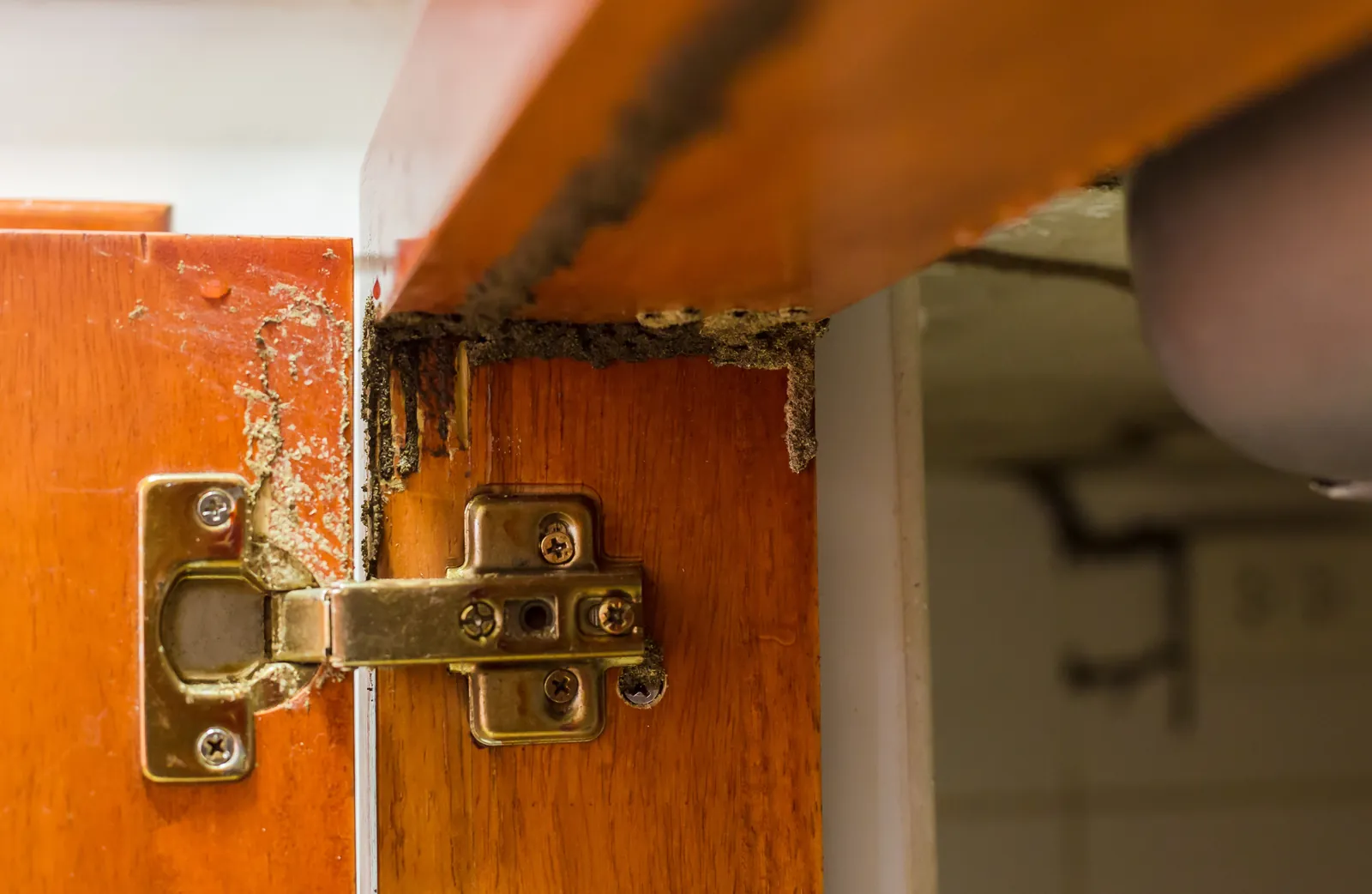
Pencil-thick brown tubes running up your foundation, slab edge, or pier blocks. That's subterranean termites highway.
Sign 2
Discarded wings
Small piles of clear, equal-length wings on window sills after a warm rainy evening. That's a swarm landing.
Sign 3
Frass pellets
Hexagonal sand-like pellets the color of cinnamon, on floors below ceiling beams or door frames. Drywood termite waste.
Sign 4
Hollow-sounding wood
Tap a baseboard or door jamb. Sounds papery instead of solid? Termites have eaten the inside.
Sign 5
Sticking doors
Wood frames swell as termite galleries fill with moisture. A door that suddenly won't latch can be the first hint.
Sign 6
Bubbled paint
Looks like water damage from a small leak. Often it's drywood termites tunneling just under the paint surface.
Sign 7
Clicking in walls
Soldiers bang their heads against gallery walls when disturbed. At night, in a quiet room, you can actually hear it.
Sign 8
Sagging floors
The expensive sign. Means structural framing is compromised. Don't wait — call today.
Honest pricing
What it costs.
Most pest companies won't post numbers. We will. Final price depends on linear footage and access — but you'll be in this range.
Subterranean · liquid
$1,200 – $2,800
Termidor SC trench & rod around the slab perimeter. One day on site. Includes annual re-inspect for 8 years.
Most homes: $1,650
Drywood · spot treat
$650 – $1,400
Borate-based wood treatment and spot-injection wood treatment delivered directly into active galleries. 2–3 hours. Ideal when infestation is contained to one area.
Most homes: $850
Drywood · whole-structure
$1,400 – $3,200
TermTrak-mapped, multi-point borate & spot-injection program for widespread drywood. Done over 1–2 visits while you stay home. No tents, no displacement.
Most homes: $1,950
All quotes are flat. No "additional materials" or "perimeter access" surprise line items. Inspection is always free.
FAQ
What people ask before they hire us.
What kind of service guarantee do you offer?
Simple one: if pests come back within 12 months of treatment, we come back at no charge. We've been doing this in Palm Beach County for 34 years — same family-owned crew on every visit. Licensed and insured (FDACS Lic. #JF8626).
Do I need to leave my house during a Termidor treatment?
No. Termidor SC is applied to the soil around your foundation and into wall voids — not airborne, not into living space. Pets and kids stay inside as normal. We're a strictly no-tent operation across the board, so termite work never means moving out.
How fast do termites actually do damage?
A mature subterranean colony of 60,000 workers can consume about 1 lb of wood per week. A Formosan colony of 5 million workers? Closer to 13 oz per day. Most homeowners don't see termites until 2–4 years after they moved in. By then, the bill is in the tens of thousands.
Should I do bait stations or liquid Termidor?
Liquid for new construction and known infestations. In-ground bait stations for ongoing monitoring around homes that have already been treated, or in HOA situations where soil treatment is restricted. We install both depending on the situation. We do not push bait stations as a primary treatment when a colony is active — they're slower.
What if I just had a real estate WDO inspection that came back clean?
A WDO (wood-destroying organism) inspection is a 30-minute visual look. It catches obvious infestations but misses early-stage colonies behind drywall. We're happy to do a deeper second-opinion inspection — free — especially before closing on a Florida home.
Is Termidor safe for pollinators and pets?
Termidor SC is applied below ground, sealed by the soil — pollinators don't contact it. EPA classifies fipronil as low-toxicity to mammals at use rates. Once the soil is treated and back-filled, the area is safe for pets and kids. We re-walk the perimeter with you before we leave.
Termite suspicion? Free inspection.
TermTrak scanner walk-through, flat-rate written quote in 24 hours, family-owned PBC crew with 34 years on the job.